
Keveney Evanne Avila, JD
My life has been an education in discernment.
I learned early that what is visible is not always the truth.
Since childhood, I've perceived things that were difficult to explain. I could see and touch energy. I felt other people’s emotions and physical sensations in my own body, and I was aware of dimensions of experience for which I had no language.
But perception and truth are not the same thing.
It has taken a lifetime of experience, study, contemplation, and rigorous self-examination to understand that distinction. Intuition can be shaped by fear. Spiritual insight can become entangled with ego. An old wound can speak with remarkable authority. Even experiences that feel profound can be misunderstood.
The ability to perceive what is unseen matters. The ability to discern what you are perceiving matters more.
That distinction has shaped my life, my formation, and the way I accompany others.
Learning to live in the visible world
As I grew older, I learned what most of us learn. I learned to trust what could be demonstrated, defended, and understood. I learned how to succeed within systems built around intellect, achievement, and external measures of a life well lived.
I was good at it.
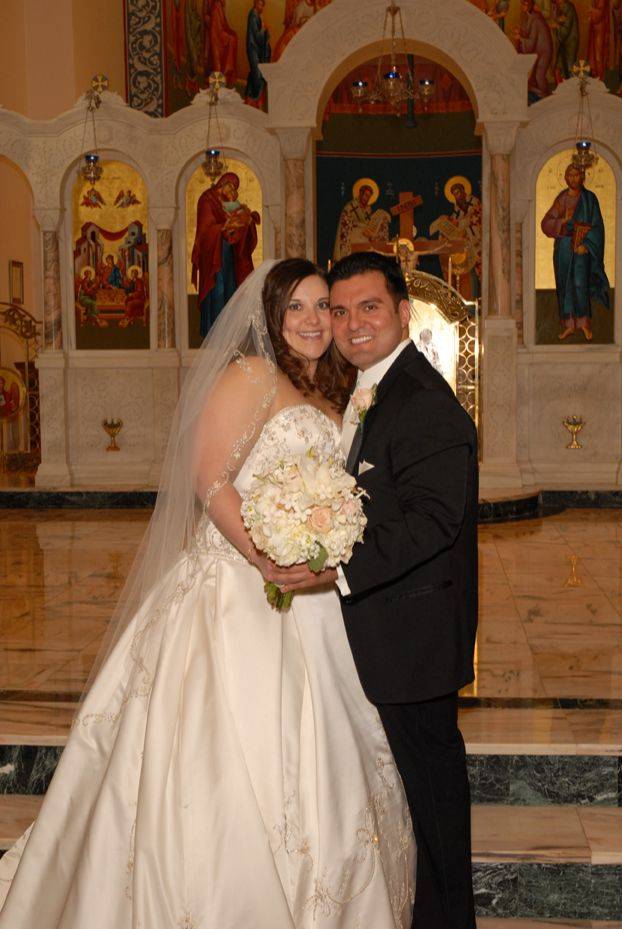
I earned a law degree, built a career, married, and created financial stability. From the outside, my life made sense.
But the deeper knowing I had carried since childhood never disappeared. I had simply become very good at living around it.
After a decade-long legal career, the life I had learned how to build and the life I knew inwardly could no longer coexist.
Returning to what I could not explain
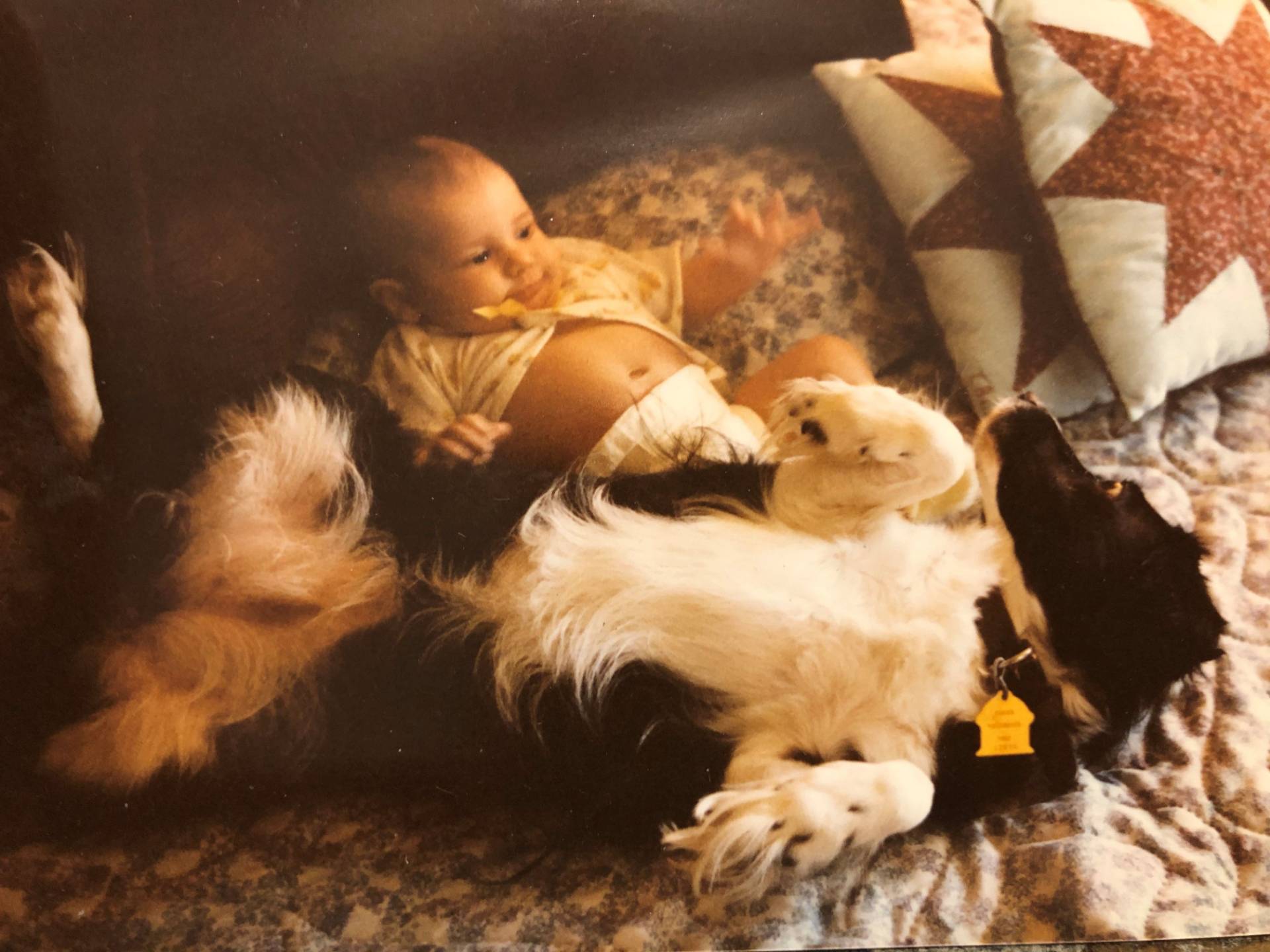
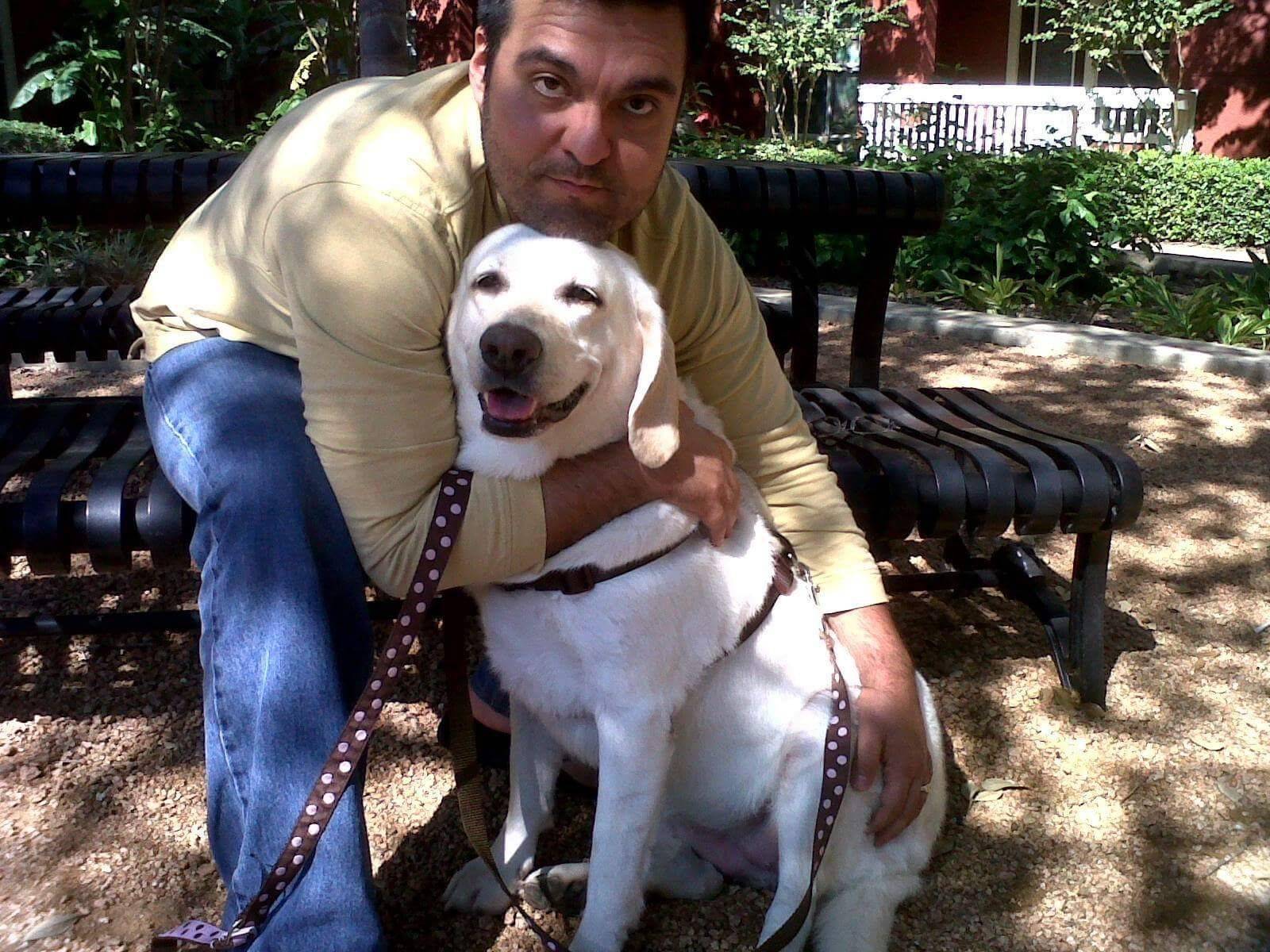
In 2016, my Labrador, Kaspi, suffered five massive seizures in a single morning. On the way to the emergency hospital, I saw what was going to happen before we arrived. I knew what the veterinarians would tell us. Kaspi was old. She likely had brain cancer or had suffered an aneurysm. There would be nothing they could do to save her, and we would have to let her go. Over the next twelve hours, both the ER vet and Kaspi’s regular vet told us exactly that.
I knew something else just as viscerally. I had known for years that the stress, anger, and untended grief I was carrying were slowly killing me, but I had not changed my life to save myself. Now I knew that the energy in our home, including my own, was harming Kaspi. I had not been willing to change for myself. I had to change to save my dog.
At the emergency hospital, Kaspi was given phenobarbital to stop the seizures. I took her home, took time away from work, and returned to something I had done instinctively as a child. I moved energy. I prayed, although I would not have called it prayer then.
Kaspi remained essentially comatose for more than a week. Then she woke up. She was fine. There was never a medical explanation for the seizures, and she never had another one.
I could no longer dismiss what I perceived simply because I could not explain it.
I stopped practicing law.
What followed was a deeper education in how we know what we know.
I spent years studying mysticism, contemplative traditions, philosophy, human consciousness, conscience, and ancient healing technologies. I sought out teachers and entered into practices that asked me not only to examine what I believed but to discern where those beliefs were coming from.
My formation also took me beyond books and classrooms. Over the years, I traveled through seventeen countries, making pilgrimages to places shaped by centuries of prayer and spiritual practice and spending time in landscapes that unsettled what I thought I knew. I walked where mystics and sages had walked, sat in silence in ancient sacred spaces, and learned what could never have been taught to me intellectually.
I was deepening my discernment.
Learning to hold both
I know we do not have to choose between intellect and intuition, reason and mystery, the seen and unseen.
My legal training taught me to question assumptions, examine evidence, recognize contradiction, and resist conclusions simply because I wanted them to be true. I did not leave that rigor behind when I stopped practicing law.
My spiritual formation taught me something equally important: reality is larger than what can be proven, measured, or explained.
Both are essential.
Intellect can dismiss what it cannot explain. Ego can mistake what feels profound for what is true.
Discernment asks us to remain open to mystery without surrendering our capacity to question what we believe we know.
That is the ground from which I accompany others.
What this means for you
I do not believe I or any other person can tell you who you are or what your life is asking of you.
What I can do is listen beneath the story you are telling, notice what you may not yet be able to see, and help you discern what is shaping you beneath conscious thought.
That sometimes means challenging the assumptions you have built your life around and bringing what has remained in shadow into your awareness.
I bring everything that has formed me to this work: intellectual rigor and intuitive perception, lived experience and spiritual formation, attention to what is visible and sensitivity to what is not.
But I do not ask you to adopt my beliefs, interpretations, or understanding of the unseen. Nor do I ask you to substitute my conscience for your own.
My role is not to give you my answers. It is to help you discern what is true for you.
Your choices remain yours.
Education & professional formation
Degrees, licenses & certifications
- Licensed attorney, State Bar of Texas
- Juris Doctor, Roger Williams University School of Law
- Grief and Bereavement Specialist Certificate, University of Vermont
- Certified Holistic Health and Wellness Coach, Institute for Integrative Nutrition
- Advanced and family mediation certification, Roger Williams University School of Law
- B.A., Politics and Peace and Conflict Studies, Juniata College, magna cum laude, Honors and Distinction in Peace and Conflict Studies
Selected legal & professional experience
- More than 2,500 hours of private coaching and accompaniment experience
- Attorney for survivors of domestic violence and human trafficking, unaccompanied immigrant children, and families in crisis
- Legal intern, Defense Institute of International Legal Studies, Naval Station Newport, Rhode Island; conducted research and developed training for the Iraqi High Court Tribunal Project focused on war crimes, crimes against humanity, and genocide
- Judicial clerk for the Honorable David Mole, Queen’s Counsel, Harrow Crown Court, London
- Mediator in family and small claims courts and community settings
International study
- International human rights law, University of Oxford; studied under South African Constitutional Court Justice Albie Sachs
- Comparative advocacy, London
- Transnational litigation, Catholic University of Portugal, Lisbon
- Conflict resolution, University of Ulster, Northern Ireland
- Conflict resolution, Irish Centre for Human Rights, National University of Ireland, Galway
- Conflict resolution, Louvain Institute for Ireland in Europe, Belgium
Spiritual, contemplative & consciousness formation
- More than 25 years of study and practice in mysticism and contemplative traditions, with particular attention to medieval and Carmelite mystics
- More than 20 years of study in consciousness, peak performance, and flow science
- Sustained cross-religious study of the Divine Feminine, with additional study of major religious and Indigenous wisdom traditions
- Formal study of Vedanta philosophy
- Pilgrimage to sacred sites and contemplative spaces, with travel across seventeen countries
- Global Mystics Certification with Andrew Harvey and Mirabai Starr, The Shift Network; 266 instructional hours
Publications
- Lawyers, Lies and Labradors: One Woman’s Search for Truth (2020)